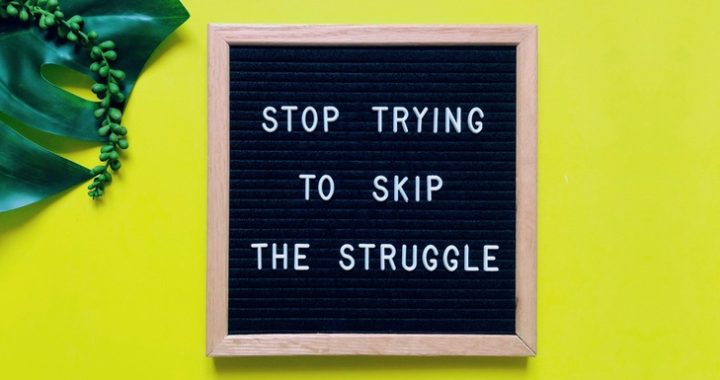
Here’s why money shouldn’t buy your way out of friction.
There is a common, unspoken assumption about wealth that many internalise early in life: we believe that the ultimate purpose of money is to reduce or eliminate our problems.
We view a well-funded balance sheet as the ultimate shock absorber. We assume that if we just have enough capital, we can insulate ourselves, and the people we love, from discomfort, failure, and friction.
But this is a profound misunderstanding of both money and human nature.
Money is an exceptional tool for solving financial problems. It can buy shelter, nutrition, medical care, and security. But money is terrible at solving human problems. In fact, when we use our wealth to bypass every uncomfortable situation, we accidentally rob ourselves of the very mechanism that creates character: the struggle.
It’s like that movie ‘Click’, where the main character acquires a remote control that allows him to click fast-forward through the tough conversations, the challenging tasks and awkward moments. As the movie progresses from light and comical applications of this new ability, it becomes darker and more emotionally gripping as we realise how much of life is being missed. Relationships suffer, and he reaches old age with more regrets than relief.
The author and risk analyst Nassim Nicholas Taleb popularised the concept of “antifragility.” He noted that some things do not just withstand shock; they actually require stress and disorder in order to grow stronger.
We are fundamentally antifragile. Our muscles only grow when they are subjected to resistance. Our immune systems only strengthen when exposed to pathogens. And our character, resilience, and capabilities only develop when we are forced to navigate difficult, frustrating, or challenging terrain.
A life with zero friction sounds appealing on a stressed Tuesday morning, but a frictionless life is actually a fragile one. If we never have to struggle, we lose the capacity to handle adversity when it inevitably arrives.
Nowhere is the temptation to avoid struggle stronger than in parenting.
When we achieve financial success, our immediate instinct is to use our resources to make our children’s lives easier than ours were. If they make a financial mistake, we bail them out. If they encounter a difficult obstacle, we use our capital or our network to smooth the path.
But as we discussed when looking at the “empty nest,” rescuing young adults from the consequences of their actions does not help them; it actively harms them. It deprives them of the psychological reward of overcoming an obstacle on their own.
We have to find the courage to let them struggle. We must allow them to feel the mild discomfort of a tight budget or the sting of a failure, knowing that this friction is exactly what forges the resilience they will need in adulthood.
This principle does not end when we reach adulthood. We often see clients approach retirement with the goal of completely eliminating effort from their lives. They want to stop working, sit on a park bench, and do absolutely nothing.
While a long holiday is a wonderful way to decompress, a permanent vacation quickly leads to a loss of purpose. We need challenges to stay sharp. We need mountains to climb, whether that is literally struggling up a steep trail on a Saturday morning, learning a complex new skill, or building a new business venture in our sixties.
True financial freedom is not the absence of struggle.
If you have no money, your struggles are dictated to you by necessity. You struggle to pay the rent, you struggle to keep the lights on, and you struggle to survive.
The greatest privilege of building wealth is not that it removes the need for effort. The greatest privilege of wealth is that it gives you the autonomy to choose your struggle.
It allows you to shift from struggling for survival, to struggling for meaning. It gives you the freedom to choose a challenging passion project, to tackle a difficult philanthropic cause, or to master a craft that requires years of frustrating practice.
Do not use your wealth to build a life completely free of friction. Use your wealth to buy the freedom to choose the struggles that make you feel truly alive.